
Photovoltaic Plant Inspection by means of UAV:current practices and future perspectives
- Panagiotis Eleftheriadis
- Nov 1, 2021
- 2 min read

Unmanned Aerial Vehicles; Photovoltaic Inspection; Deep Learning; Image Processing

Recent trends show the importance of photovoltaic (PV) system inspection: in fact, it allows the increase in their performance and profitability. Moreover, it represents an important step for the safety and asset management of PV plants. Among all the possible inspection techniques, the use of Unmanned Aerial Vehicles (UAVs) has proven to be very effective in obtaining excellent results with a competitive cost: in particular, this type of inspection allows to drastically reduce inspection times with good quality of the results obtained. Finally, this inspection technique has been well combined with the development of image processing techniques capable of analyzing and processing the data acquired in the field quickly and reliably. The aim of this paper is to review the current practice in UAVbased
PV plant inspection and to analyse future perspectives.
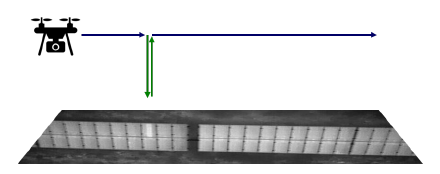
Unmanned Aerial Vehicle-based inspection is a key factor in increasing the productivity of PV plants because it allows a more accurate and frequent inspection with respect to manual procedures. This lead to an accurate maintenance with a positive benefit-cost ratio.
In this paper, an overview on the inspection process is provided, starting from the definition of the optimal route of the UAV, to the final defect identification and recognition. The advantages of this procedure are shown and the most critical steps have been pointed out.study may be used to better understand the issues related to PV waste management, and especially of recycling PV modules, from the technical processes to the regulation and economic aspects. In fact, many documents, and probably the most significant ones, have been reviewed, representing a reference of scientific knowledge of recycling c-Si PV modules. Moreover, the information on the energy consumption may be used as a reference point for future LCAs considering the EoL phase. Finally, ideas of how to improve the recycling of c-Si PV modules, and their EoL management more in general, may be deduced from this study.
This paper was published by researchers of the Politecnico di Milano.


Comments